
Database Update October 2026: 4,000+ New Agricultural Datapoints

Yes it’s here: our most exciting data release ever that pushes what’s possible with Niatsu further than ever before and we are just starting. Let me highlight some of our learnings and the path it took us to get here from the technical point of view.
Experts and Beginners
My passion for data goes back a couple of years working at the Swiss Radio & Television Archive where I did my civil service. I had to label and categorize thousands of old folklore music records from the sixties from Switzerland. The tool we were using for this task was newly developed and tracked all music tracks, basically a Spotify for public radio. The tool was a mess and I added more mess to it.
Well, what has this to do with Niatsu, you ask? That experience taught me that a data tool is only as good as it is for the people who work in it every day. And in the last years I realized we have two types of users:
- The Expert
- The Beginner
The expert wants all the details and tries to understand from where the emissions are from and is fully in love with the accounting part of product carbon footprints. We can make these people happy if we deliver all the information and they can tweak decisions. On the other side the beginner just wants a number. They want to get the job done and care less about the way a PCF was made and more about what to do with it. One is not more important than the other and they both care about the work they do - they just have a different perspective on what counts.
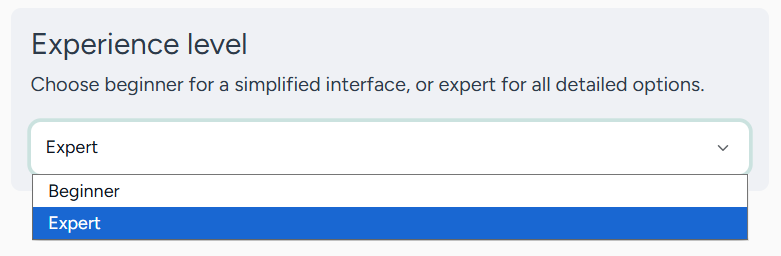
Back at SRF I felt the tool was developed for the engineers and neither for the expert nor the beginner. That’s why our newest data release excites me so much. We are adding thousands of proprietary datapoints to Niatsu that are modelled with a new level of granularity and regionalization. That is exciting for the expert because this is better data and with all the information in the back of the system. We will be able to roll out more and more background information.
Want to know what the applied fertilizer was for your emission factor? No problem. Want to understand the yields of a specific year in a region? You’ll get answers.
But not just the expert benefits but also the beginner. Because all of this data is just replacing a lot of old data and nothing needs to be changed by the user, but they get way better data. And still in our reports more and more of this information will be available that also helps to build credibility for whoever is using our PCFs.
What are we adding?
This is our biggest data release ever in terms of quality improvements.
- Cereals +506 New Datapoints
- Vegetables +1517 New Datapoints
- Legumes, nuts, oilseeds and spices +1005 New Datapoints
- Fruits +1252 New Datapoints
We already did a big data release a couple of months back on animal produce and cereals. Now with these new datapoints we are significantly adding more coverage. The exciting thing is that the models behind these datasets are customizable. This means if you have primary data at farm available this data can be considered and our default model can be tweaked. This is especially relevant as this allows for primary farm data within the same methodology.
What’s following?
With the addition of agricultural ingredients at farm level, our processed ingredients are automatically updated. Over the coming months we will be launching our product database. This will be based on this release and include higher level items like sauces, doughs, cheeses and sweets. We have learned that the data granularity with our customers can vary a lot. The new product database will add significantly more regionalization at product level considering supply chains and regionalized emission factors that are also relevant for retail customers.
What did we change internally?
Our team has embraced AI a lot more this year. I think a lot of the coding tools got so good that experts in the LCA domain can now develop whole architectures once they have been introduced to a tool like Claude Code or Cursor. This has not changed the precision of how we develop data but it has helped us to move away from scripts into actual data generation engines that are faster and will allow us in the future to generate custom datasets for customers more quickly and with higher precision.